
Uganda · Queen Elizabeth National Park
Queen Elizabeth National Park
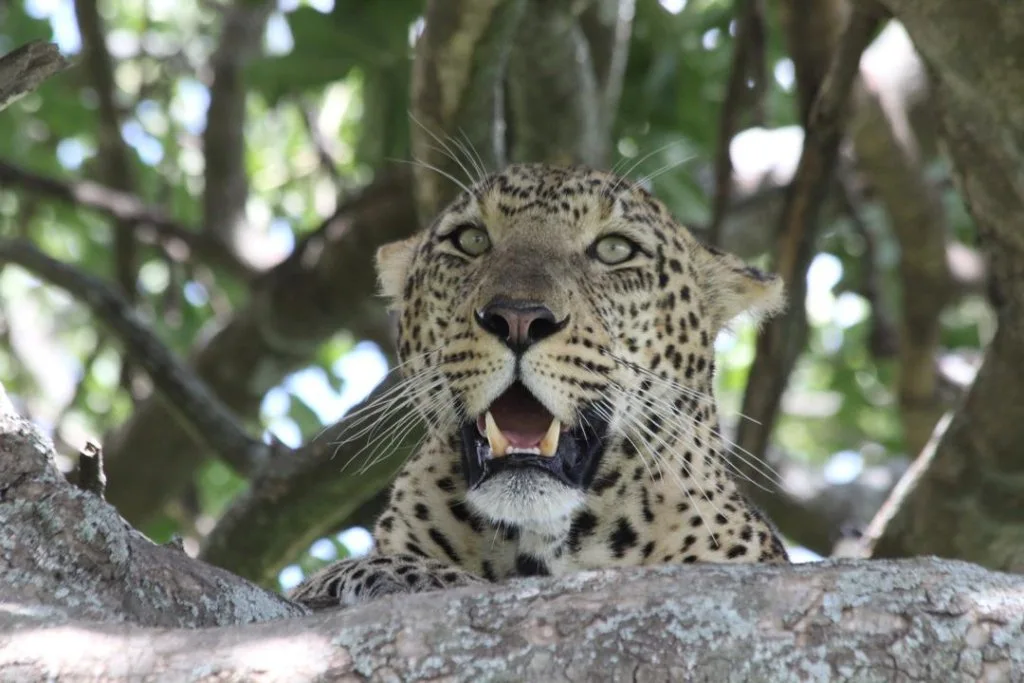
Where the Albertine Rift escarpment drops into savannah, volcanic lakes and the wetland channels of the Kazinga — one of Uganda’s most varied landscapes, and the park where lions have learned to rest in fig trees.
A varied landscape
Savannah, wetland and rift valley.
Queen Elizabeth National Park blends open savannah, volcanic crater lakes, the Kazinga Channel and rainforest fragments. It is Uganda’s most varied park by landscape — and the boat cruise on the Kazinga, past hippo, elephant and some of the continent’s densest hippo concentrations, is among its signature experiences.
What the park is known for
Kazinga, Ishasha and varied terrain.
Kazinga Channel
A boat cruise past hippo, elephant and crocodile — the park’s signature water experience.
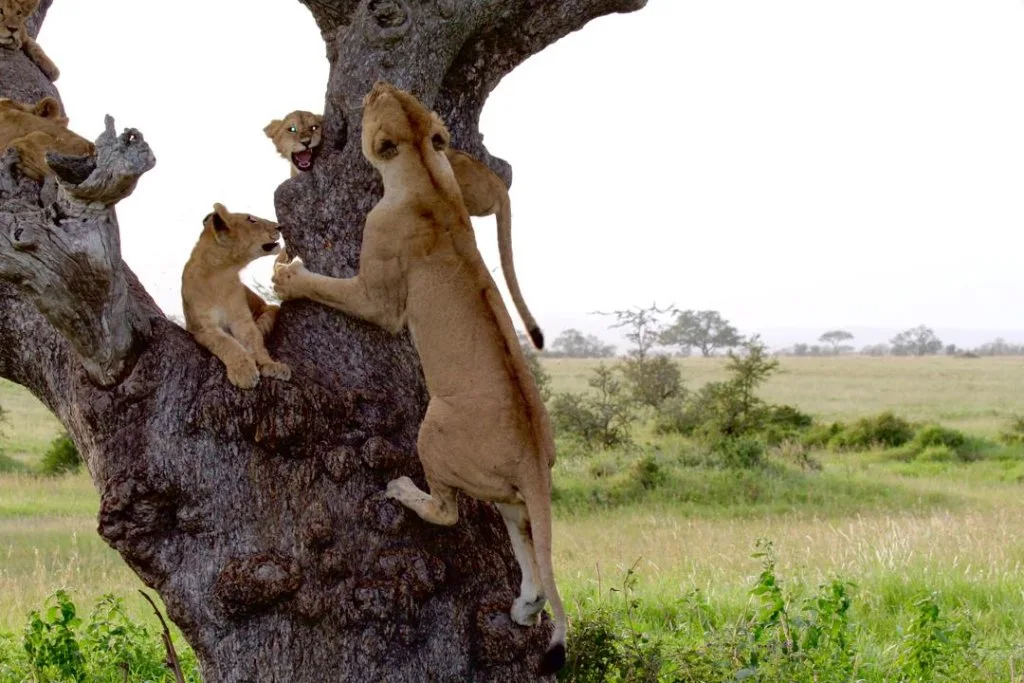
Ishasha’s tree-climbing lions
One of very few places where lions rest in fig trees — a behaviour seen in the Ishasha sector, not guaranteed on any visit.
Diverse landscapes
Savannah, crater lakes, wetlands and forest fragments in one park.
Boat and land
Game drives and boat cruises give two ways to read the park.
Wildlife context
Possibilities, not promises.
Queen Elizabeth holds lion, elephant, buffalo, hippo and a rich bird list — but wildlife sightings are never guaranteed, and the famous tree-climbing lions of Ishasha are a behaviour, not a certainty. The Kazinga boat runs to a schedule that can shift with conditions. We read the park with honest expectations and patient guiding.
Seasonal and ecological variation
Two sectors, shifting water.
Seasonal variation
Wildlife concentrates around water in the dry months; the green season brings birdlife and fewer vehicles.
Water levels
Channel and lake levels shift with the rains, shaping boat access and hippo concentrations.
Kyambura Gorge
A forested gorge holding a small chimpanzee community — tracking is possible, sightings are not guaranteed.
Two sectors
The north (Mweya, Kazinga) and the south (Ishasha) read differently and are often combined.
When to consider travelling
Concentrate at water, or green and quiet.
Wildlife and birdlife both follow the season.
June to September
Dry season
Wildlife concentrates at water; the main game-drive window.
December to February
Short dry window
A second dry period; good for game drives and boat cruises.
March to May, October to November
Green rains
Greener, fewer vehicles, strong birdlife; wetter conditions.
Lion and tree-climbing-lion sightings are never guaranteed. Boat departure times can shift with conditions. Wildlife concentrations vary with season and water.
How it combines
Between Bwindi and Kibale.
Queen Elizabeth sits between Bwindi’s gorillas and Kibale’s chimpanzees — the natural middle of a western Uganda great-ape and savannah arc. We pace it so the Kazinga cruise lands at golden hour and Ishasha reads as a deliberate stop, not a rush.
Pair with Bwindi ↗Plan with us
Tell us how Queen Elizabeth fits.
Ishasha, the Kazinga, or the full western Uganda arc. Share your dates and we will shape it.
A sense of place
Take a moment. Look closer.
Continue your journey
There is more to discover.
 ↗
Uganda
Bwindi Impenetrable Forest
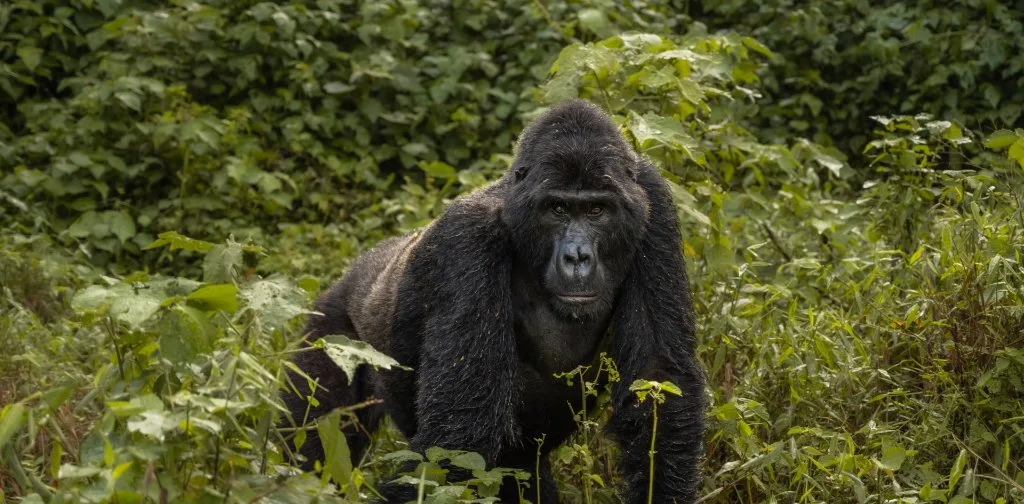
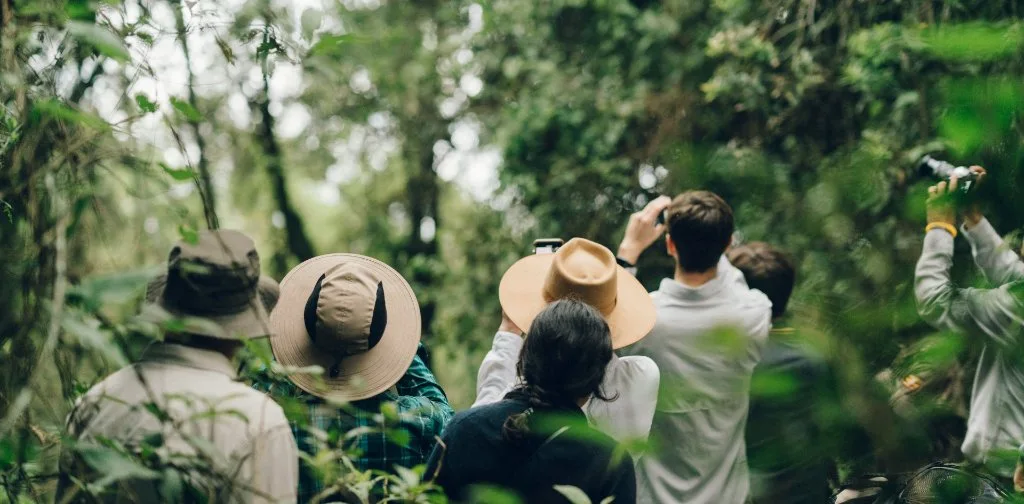
A misted montane rainforest in Uganda’s south-west, home to roughly half the world’s mountain gorillas. A trek here is a physical walk through steep, wet forest that ends with a permitted ho…
 ↗
Uganda
Kibale Forest
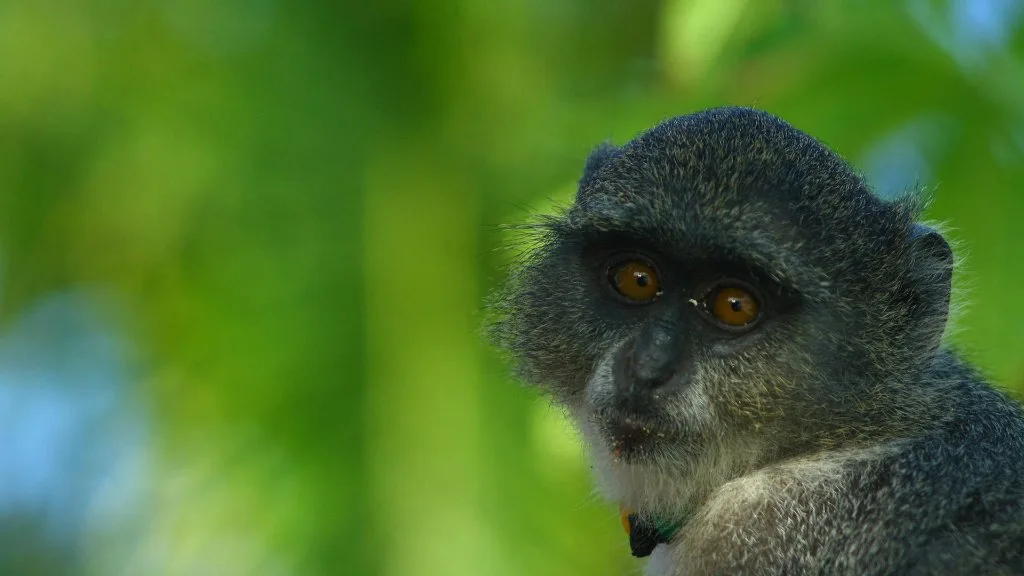
A western Ugandan rainforest holding the highest density of primates of any African forest, and a habituated chimpanzee community tracked on foot at dawn — the primate-focused counterpart to…
 ↗
Journeys
Safari Experiences
Wildlife journeys across Tanzania, Kenya, Uganda and Rwanda — built around your pace, your season and the moments you are hoping for, never a fixed package.