
Uganda · Kibale National Park
Kibale Forest
A western Ugandan rainforest holding the highest density of primates of any African forest, and a habituated chimpanzee community tracked on foot at dawn — the primate-focused counterpart to Bwindi’s gorillas.
The primate forest
The primate capital, read at dawn.
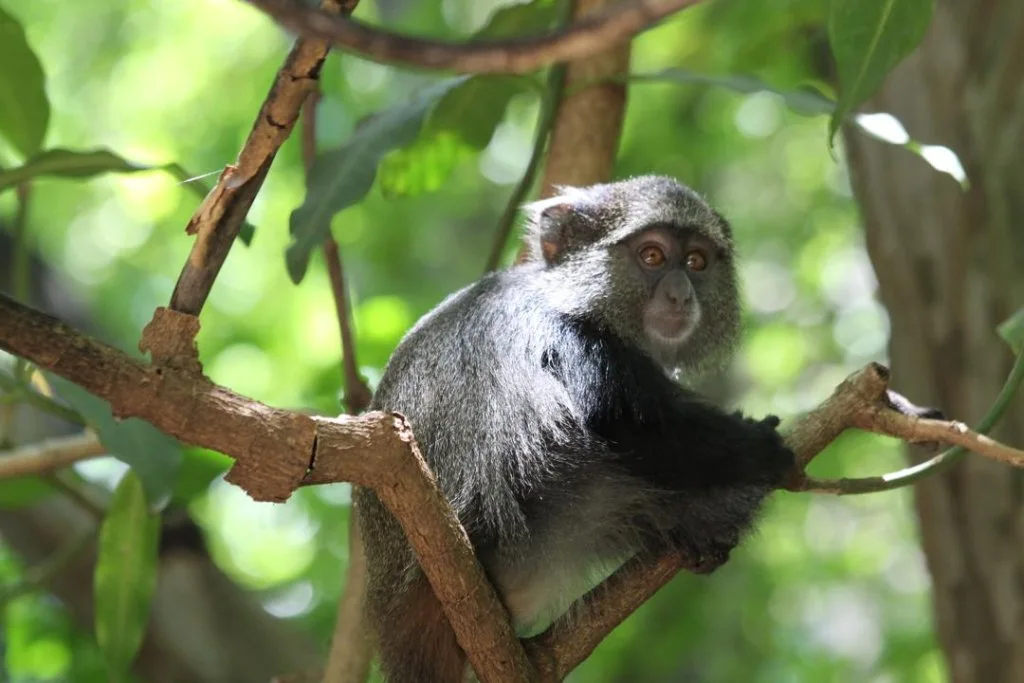
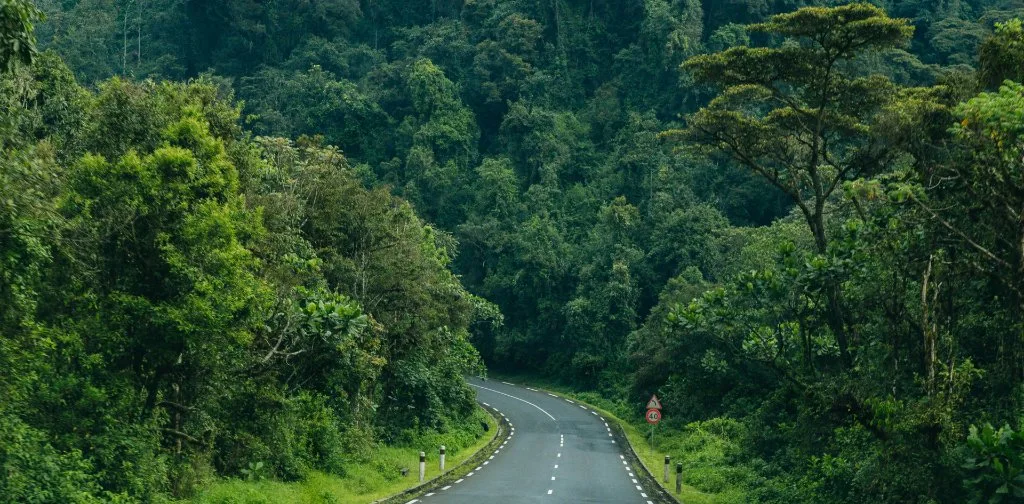
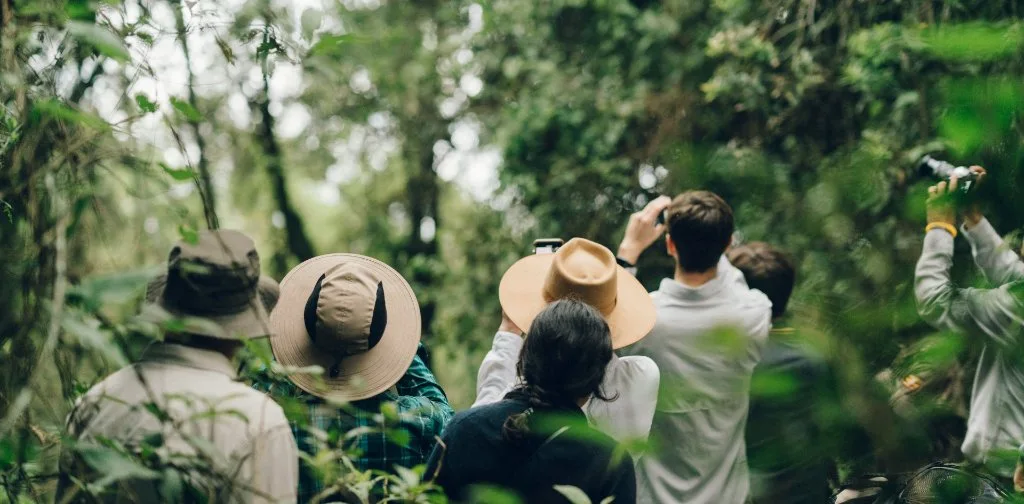
Kibale Forest holds the highest density of primates of any African forest — thirteen species, including a long-habituated chimpanzee community tracked on foot at first light. Chimpanzees are loud, social and unpredictable; tracking them is generally faster and less steep than gorilla trekking, but sightings are never guaranteed. The forest itself is the experience, with a dawn chorus unlike anywhere else in East Africa.
What Kibale is known for
Chimps, thirteen primates and rainforest biodiversity.
Chimpanzee tracking
A habituated chimp community tracked on foot at dawn.
Thirteen primate species
The highest primate density of any African forest.
Rainforest biodiversity
Birds, butterflies and forest species in a compact park.
Trekking and physical considerations
Tracking is generally shorter and less steep than gorilla trekking, but on forest trails.
A different experience
Chimps are not gorillas.
Chimpanzee tracking and gorilla trekking are different experiences. Gorilla trekking is a long, steep walk ending with a quiet hour seated beside a family; chimpanzee tracking is a faster, noisier pursuit of a moving community through forest, with sightings that can be brief or prolonged. Both are extraordinary; they are not the same, and we help you choose — or do both.
Guide-led experiences
Trackers, habituation and the Bigodi wetland.
Expert guiding
Local guides and trackers lead every chimp tracking experience.
Habituation experiences
Longer habituation experiences are sometimes available; we advise on current options.
Bigodi Wetland
A community wetland walk beside the forest — birds and primates, community-run.
Crater Lakes
Volcanic crater-lake scenery surrounds Kibale; a gentle contrast to forest trekking.
When to consider travelling
Two dry windows — but the forest is wet year-round.
Tracking is possible year-round; trails change with the weather.
June to September
Dry season
The driest months for chimp tracking — though rain is possible year-round.
December to February
Short dry window
A second dry period; good for forest trekking.
March to May, October to November
Green rains
Greener, fewer trekkers, wetter trails.
Chimpanzee sightings are never guaranteed. Tracking duration varies. Rain is possible year-round in the rainforest; trail conditions change with weather.
How it combines
Kibale pairs with Bwindi and Queen Elizabeth.
Kibale sits between Bwindi’s gorillas and Queen Elizabeth’s savannah — the natural middle of a western Uganda primate-and-savannah arc. The three combine into one of East Africa’s most rewarding short circuits.
Pair with Bwindi ↗Plan with us
Tell us how Kibale fits.
Chimp tracking, or the great-ape circuit with Bwindi. Share your dates and we will shape it.
A sense of place
Take a moment. Look closer.
Continue your journey
There is more to discover.
 ↗
Uganda
Bwindi Impenetrable Forest
A misted montane rainforest in Uganda’s south-west, home to roughly half the world’s mountain gorillas. A trek here is a physical walk through steep, wet forest that ends with a permitted ho…
 ↗
Uganda
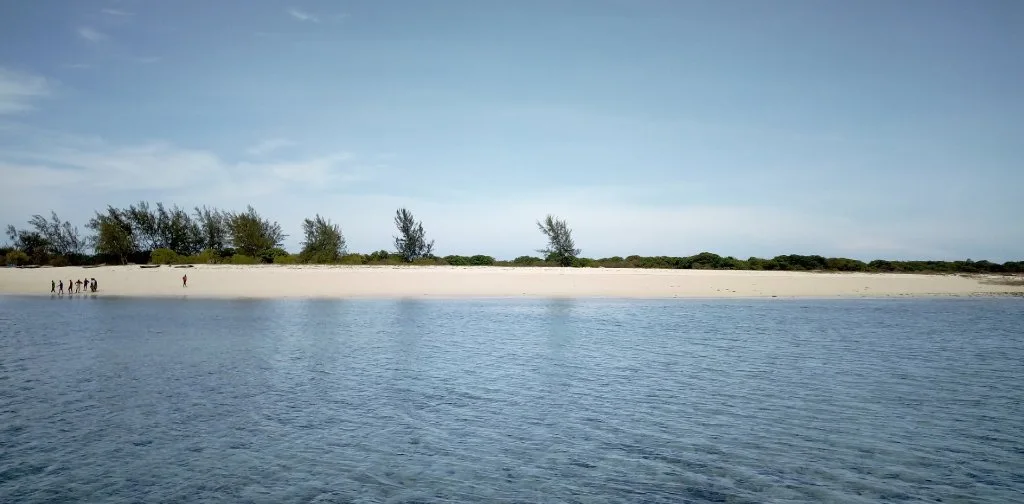
Queen Elizabeth National Park
Where the Albertine Rift escarpment drops into savannah, volcanic lakes and the wetland channels of the Kazinga — one of Uganda’s most varied landscapes, and the park where lions have learne…
 ↗
Journeys
Gorilla Trekking
Forest journeys in Uganda and Rwanda to spend one permitted hour with a habituated mountain gorilla family — the most intimate wildlife encounter on the continent.