Journeys · Great Migration
The Great Migration, witnessed with intention
Follow one of nature's most extraordinary movements through the Serengeti and beyond — where millions of wildebeest, zebra and other grazers move in response to rain, grass and instinct, and every season reveals a different chapter.
Why it matters
A continuous ecological cycle, not a single event.
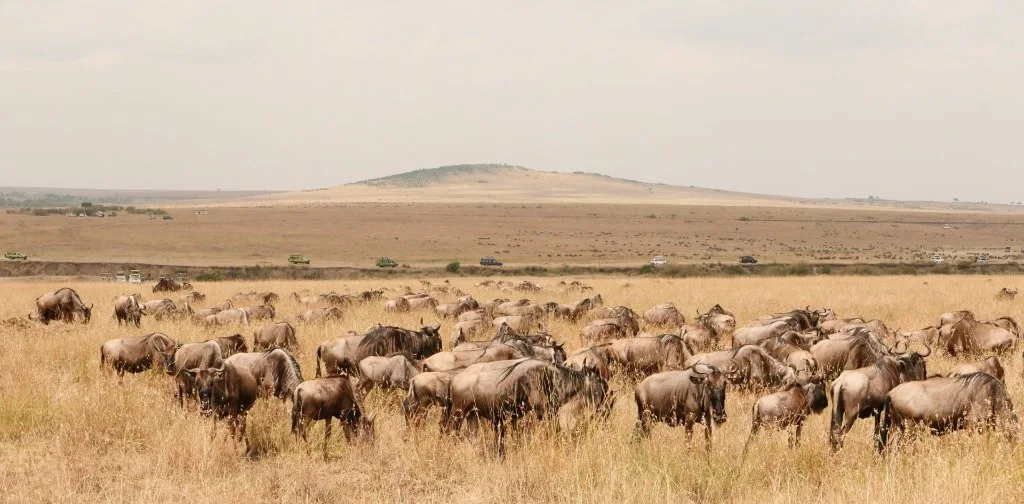
The Serengeti–Mara migration is one of the natural world's great movements. Wildebeest are central to the spectacle, with zebra and other herbivores moving through connected habitats in response to rainfall, fresh grazing and water. Predators follow the herds — encounters are possible, but never guaranteed. The migration is part of a wider ecosystem connected to the Maasai Mara and surrounding conservation landscapes, and responsible, low-impact travel is essential to protecting it. We do not promise a sequence of dramatic crossings; we help you understand where the herds are likely to be, and give you the time to be there.
January–March
Southern Serengeti & Ndutu
Calving season is often associated with the southern Serengeti and Ndutu grasslands, subject to rainfall and local conditions. Thousands of calves are born on the short-grass plains.
April–May
Central & Western Serengeti
Herds may begin moving north and west as grazing conditions change. This period can offer quieter landscapes and strong photographic atmosphere as the long rains settle the dust.
June–July
Western Corridor
Western and northern movements may become more prominent as the herds approach the Grumeti River, while river-crossing conditions remain unpredictable.
August–October
Northern Serengeti & Mara
Northern Serengeti and Mara River areas can be important migration zones, but crossings are never scheduled events — they depend on the herds, the rain and chance.
November–December
Eastern & Southern Plains
Short rains often influence movement back toward the southern plains, depending on conditions. The cycle turns again toward calving.
Migration timing follows rain, grass and water — not a fixed calendar. Our specialists plan around current conditions and keep expectations honest.
Where to go
Different areas, different chapters.
The Serengeti is vast. The part of the ecosystem you choose — and the time of year — shapes everything you see.
Southern Serengeti & Ndutu
The calving grounds. Open short-grass plains and dense predator action January–March.
Western Corridor
The Grumeti River. Remote, crocodile-rich crossings May–July, far from the crowds.
Northern Serengeti & Mara
The Mara River. The most dramatic potential crossings July–October — never guaranteed.
Central Seronera
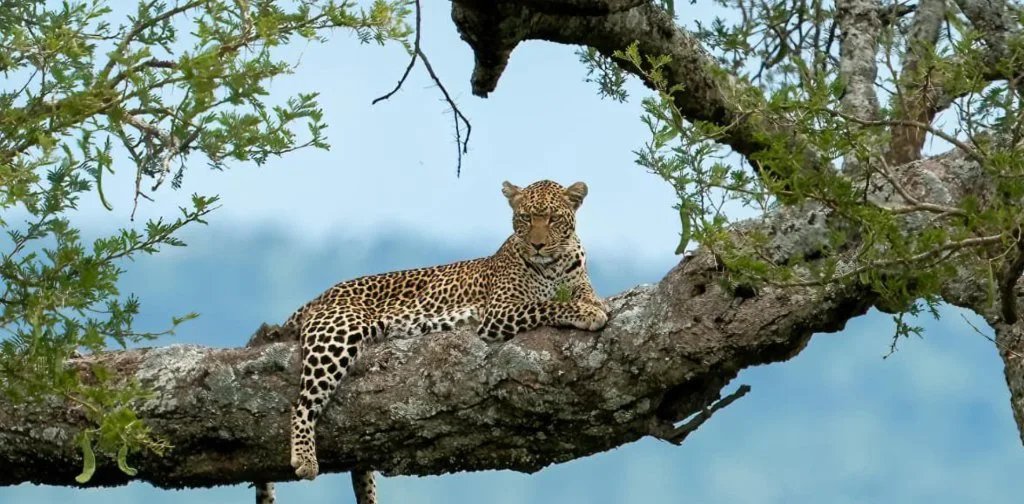
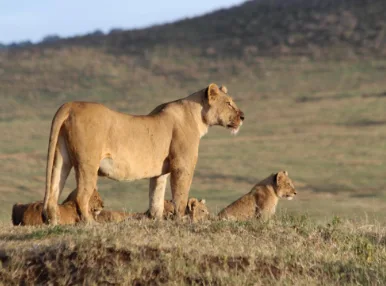
Year-round wildlife. Leopard country and resident prides — a reliable base in any season.
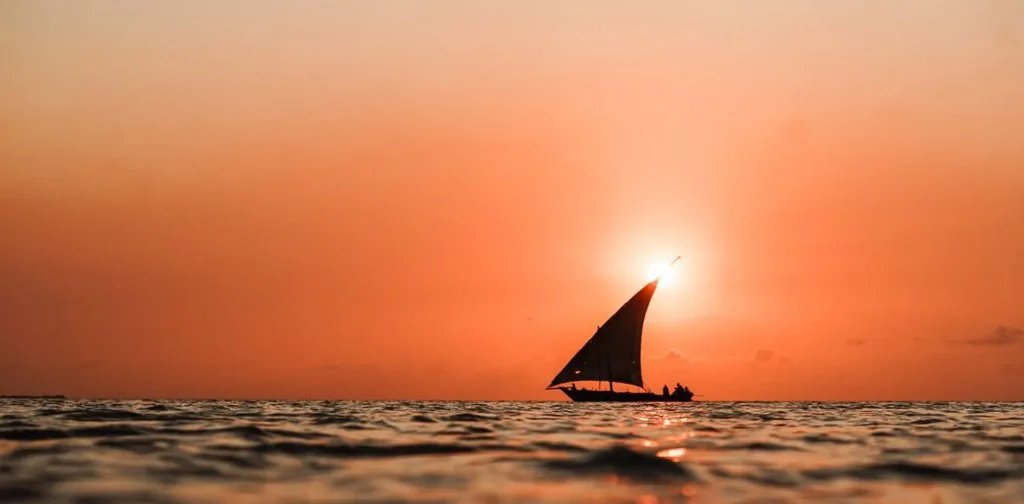
The hidden crossing.
What you may encounter
Herds, predators, landscapes and quiet moments.
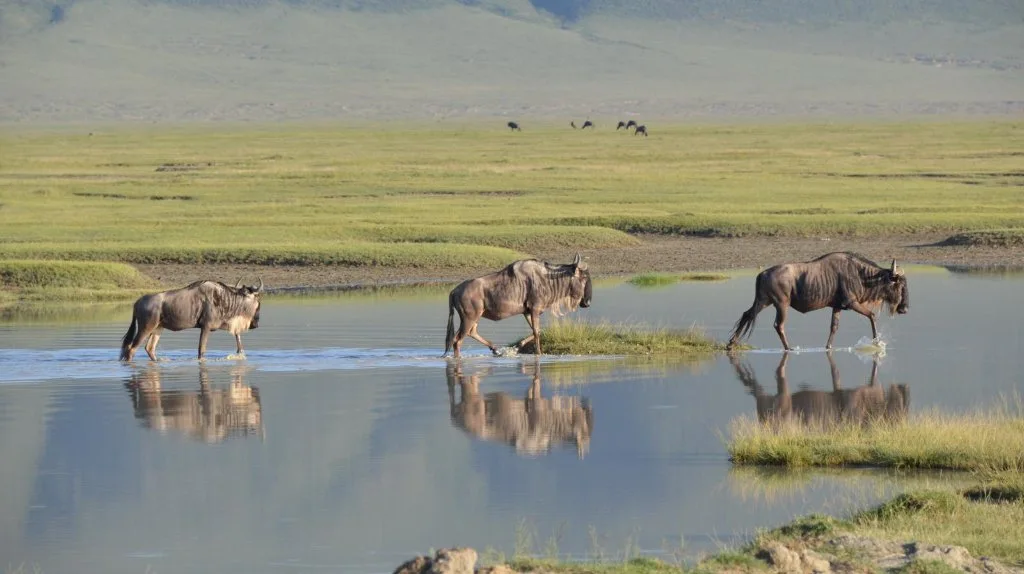
Some days the herds are everywhere — lines of animals to every horizon. Some days they are distant, and the land feels enormous and empty. Both are the migration. Lions, cheetah and hyena follow the herds; the open plains hold dramatic skies and golden light; and the quiet hours between sightings are often the ones you remember. We help you read it, and give you the time to be there when it matters.
How AT ONE approaches it
Positioned by season, paced by you.
We track where the herds are, choose the right camps for your dates, and build in the time to let the migration come to you.
Private guiding
A dedicated guide who reads the herds, the light and the land for your days.
Time and patience
Longer stays in the right place, rather than racing between sightings.
Flexible routing
Camps and days shaped around where the herds are for your dates, not a fixed line.
Conservation-first
Low-impact guiding that respects the ecosystem, the wildlife and the community.
Local knowledge
East African specialists who track conditions and position you honestly.
Honest expectations
We tell you what is likely, what is possible, and what cannot be promised.
Travel that gives more than it takes.
Visitor pressure
We avoid crowded crossings and favour quieter zones and private positions.
Vehicle etiquette
Respectful distances, limited vehicles at a sighting and no chasing the herds.
Habitat respect
Stay on designated tracks and leave the land exactly as we found it.
Community value
Local guides, local camps and conservation fees that stay in the ecosystem.
Suggested journey styles
Shape it around the way you travel.
The migration suits many kinds of travellers. We start with you, not a package.
First safari
A migration-led first East African journey, paced to learn the bush.
Private migration
A dedicated guide and vehicle, positioned for the herds and the quiet moments.
Family
Age-aware pacing with guides who keep children engaged and safe.
Photographic
More time, better positioning and journeys shaped around the light.
Slow & immersive
Stay longer, move less and read one part of the ecosystem deeply.
Planning guidance
Stay longer, move less, expect honestly.
As AT ONE planning guidance (not a fixed rule), we generally plan a minimum of around a week in the ecosystem, and often recommend two base camps in different regions so you can follow the herds without spending your days on the road. Camp movement, internal flights and flexible days are built in — the migration does not wait for a fixed itinerary. Tell us what draws you to the Serengeti, and we will shape the route, season and pace around you.
Realistic expectations
What we will and won't promise.
We will promise positioning, time, expert guiding and honest timing advice. We will not promise a river crossing, a predator kill, or a specific herd on a specific day. The migration is wild and moved by rain. The journeys that succeed are the ones that give the bush enough time to deliver — and that is what we build.
Why travel the migration with AT ONE
A trusted hand on a wild spectacle.
Private or small-group
Your own guide and vehicle, or a carefully sized small group.
Flexible routing
Adjusted around current herd movements and conditions.
Experienced local guiding
East African guides who know the ecosystem and the crossings.
Conservation-conscious
Operating principles that protect the habitat and wildlife.
Honest expectations
Clear about seasonal uncertainty — no crossing guarantees, ever.
Direct specialist access
Speak directly with an AT ONE Journey Specialist.
Related destinations
Where the migration moves.
Across the Serengeti and the Masai Mara.
Related journeys
Pair the migration with these.
The herds, the mountain, and the coast in one journey.
The migration follows the rains, not a calendar. Share your dates and what you hope to see — we will design a journey around where the herds are likely to be, and keep every expectation honest.
Continue your journey
There is more to discover.
 ↗
Journeys
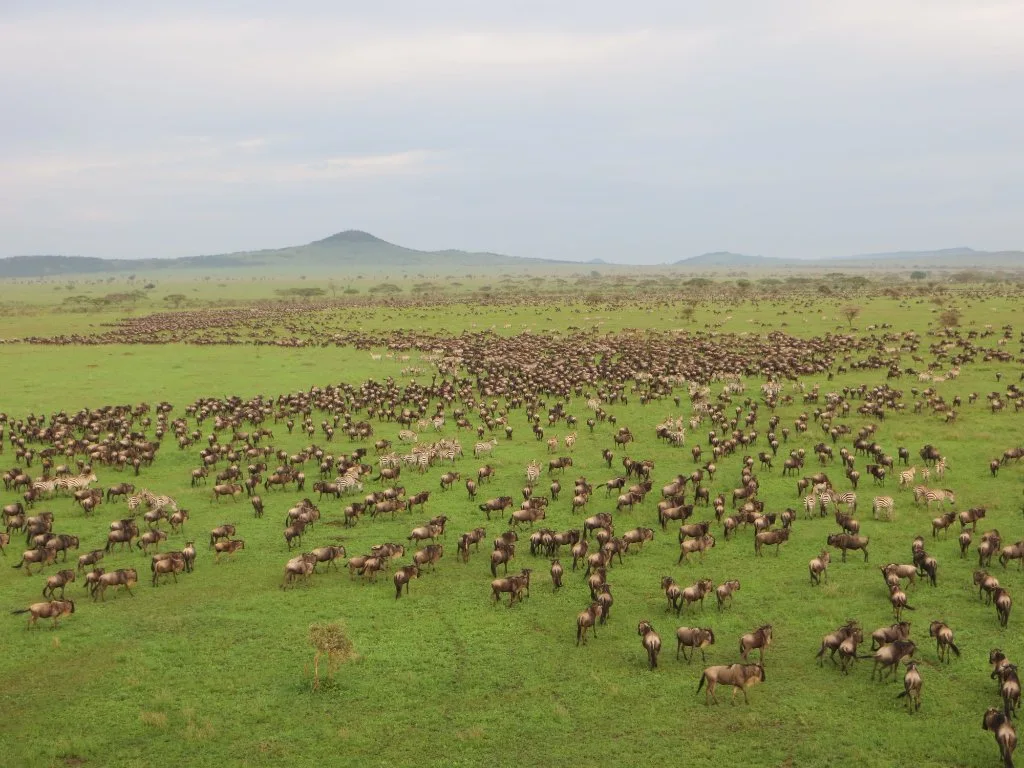
Safari Experiences
Wildlife journeys across Tanzania, Kenya, Uganda and Rwanda — built around your pace, your season and the moments you are hoping for, never a fixed package.
 ↗
Journeys
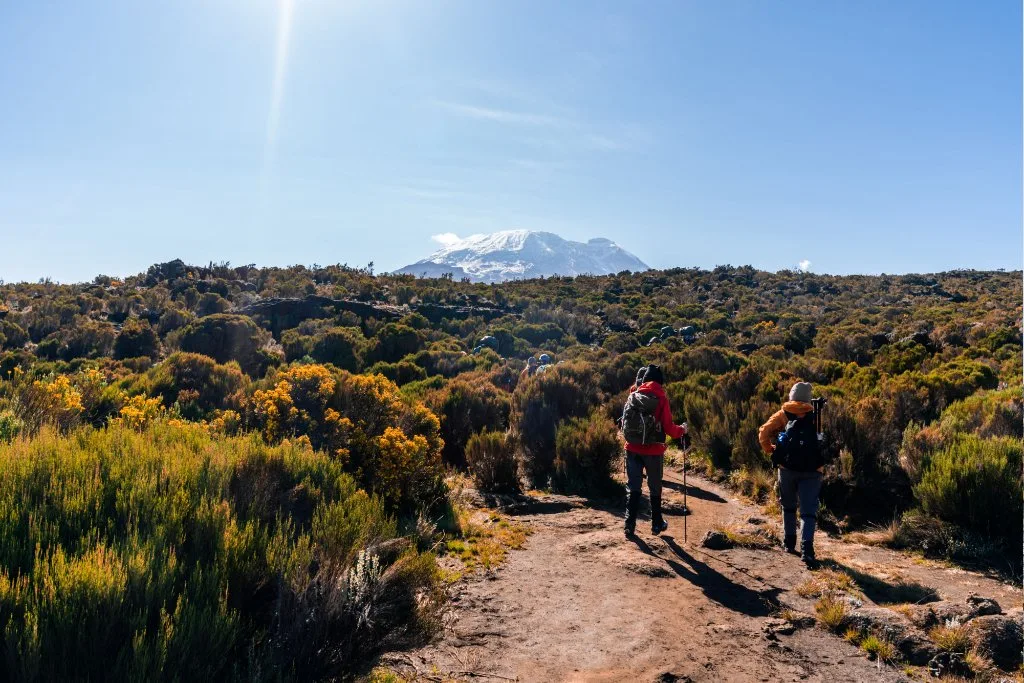
Kilimanjaro
A trek to 5,895 metres is not a race to the top — it is a journey through every climate zone, made safe by acclimatisation and a team that walks with you.
 ↗
Journeys
Gorilla Trekking
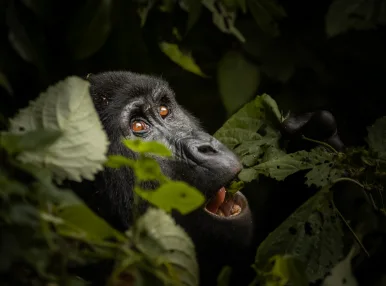
Forest journeys in Uganda and Rwanda to spend one permitted hour with a habituated mountain gorilla family — the most intimate wildlife encounter on the continent.