
Uganda · Bwindi Impenetrable Forest
Bwindi Impenetrable Forest
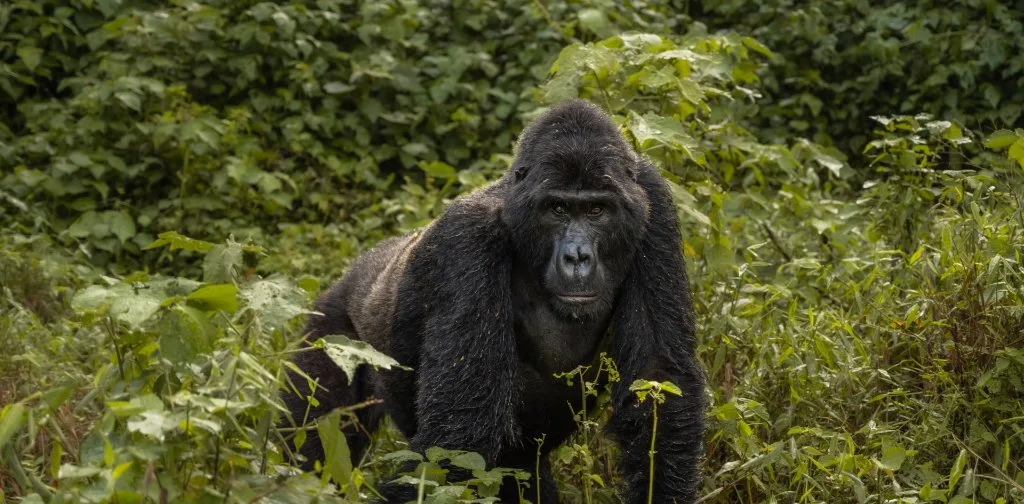
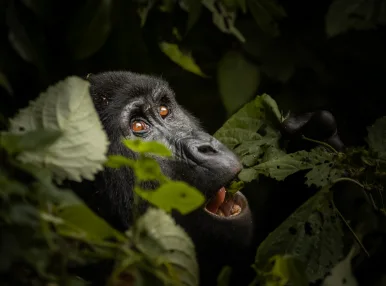
A misted montane rainforest in Uganda’s south-west, home to roughly half the world’s mountain gorillas. A trek here is a physical walk through steep, wet forest that ends with a permitted hour beside a habituated family — a quiet, considered encounter widely regarded as one of wildlife travel’s most moving experiences.
The forest
A rainforest that earns its name.
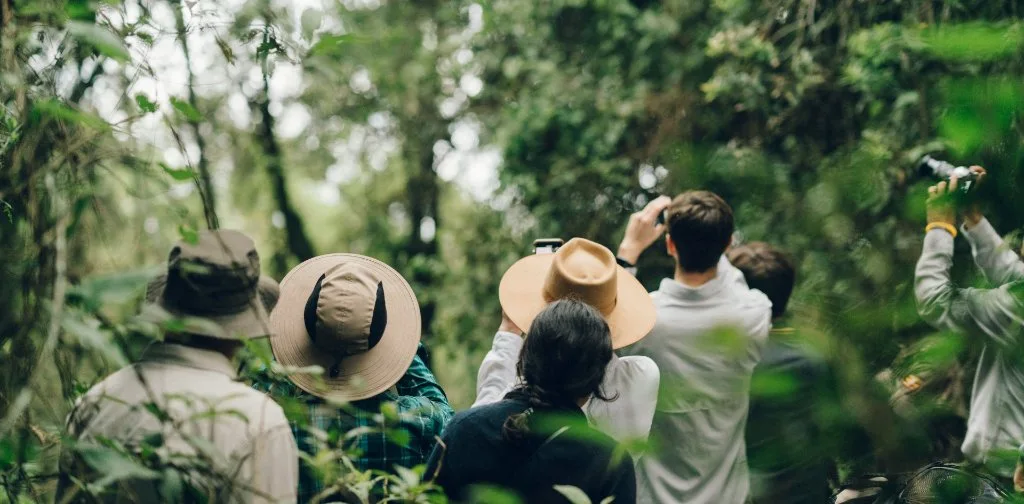
Bwindi Impenetrable Forest is ancient montane rainforest — dense, steep and wet, and home to roughly half the world’s remaining mountain gorillas. The forest keeps its own weather: mist, rain and sudden light. Trekking here is a physical walk with a guide and tracker, ending with a strictly limited hour beside a habituated family. The encounter is on the gorillas’ terms; nothing about it is guaranteed except the care taken to keep it respectful.
What Bwindi is known for
Gorillas, ancient forest and Albertine Rift biodiversity.
Mountain gorilla families
Habituated families visited in small trekking groups for a permitted hour.
Ancient montane rainforest
Steep, dense, wet forest — the character that gives Bwindi its name.
Albertine Rift biodiversity
Birds and primates found only in this rift-region forest.
Community and guide context
Local guides and trackers lead every trek; community benefit sharing surrounds the park.
Trekking reality
Steep, wet and unpredictable — and worth preparing for.
Trekking in Bwindi is a genuine physical walk. Distances and times vary widely: a family may be near the forest edge or hours into steep terrain, and there is no way to know in advance. We advise honest physical preparation, sturdy footwear and walking poles, and we talk through what to expect before you commit. The forest is wet year-round; rain is part of the experience, not an exception.
Permits and timing
Permits, allocation and the one-hour rule.
Permits required and limited
Gorilla permits are required, limited in number and subject to availability. We manage procurement and advise on current authority pricing.
No guaranteed family allocation
Which gorilla family you trek to is assigned on the day by park authorities — not chosen in advance.
One hour, strictly
Time with a family is limited to one permitted hour, at a respectful distance.
Seasonal timing
Two dry windows suit trekking best, but rain is possible year-round in the rainforest.
On the gorillas’ terms
A respectful hour, at a distance.
Mountain gorilla encounters are closely managed for the gorillas’ wellbeing: a maximum of eight visitors per family, one hour, a minimum distance, and strict health guidance — stay home if unwell, as gorillas share our susceptibility to human illness. We brief every guest beforehand. The encounter is never guaranteed; the gorillas are wild, and the forest decides.
When to consider travelling
Two dry windows — but the forest is wet year-round.
Indicative periods; rainfall in rainforest is never absent.
June to September
Dry trekking season
The driest months for gorilla trekking — though rain is possible year-round in rainforest.
December to February
Short dry window
A second, shorter dry period; good for forest trekking.
March to May, October to November
Green rains
Rains green the forest; fewer trekkers and lower lodge rates, with wetter conditions.
Rain is possible in Bwindi at any time. Gorilla permits are required, limited and subject to availability and current authority pricing. Gorilla-family allocation, trek duration and sightings are never guaranteed.
How it combines
Bwindi pairs with Kibale, Queen Elizabeth and Rwanda.
Bwindi combines naturally with Kibale’s chimpanzees and Queen Elizabeth’s savannah within Uganda, and with Rwanda’s Volcanoes National Park across the border for a cross-border great-ape arc. We pace the transfers honestly — the roads into Bwindi are part of the journey.
Pair with Kibale ↗Plan with us
Tell us how Bwindi fits your journey.
A gorilla trek at Bwindi, or Bwindi within a wider Uganda great-ape arc. Share your dates and fitness, and we will shape it.
Continue your journey
There is more to discover.
 ↗
Uganda
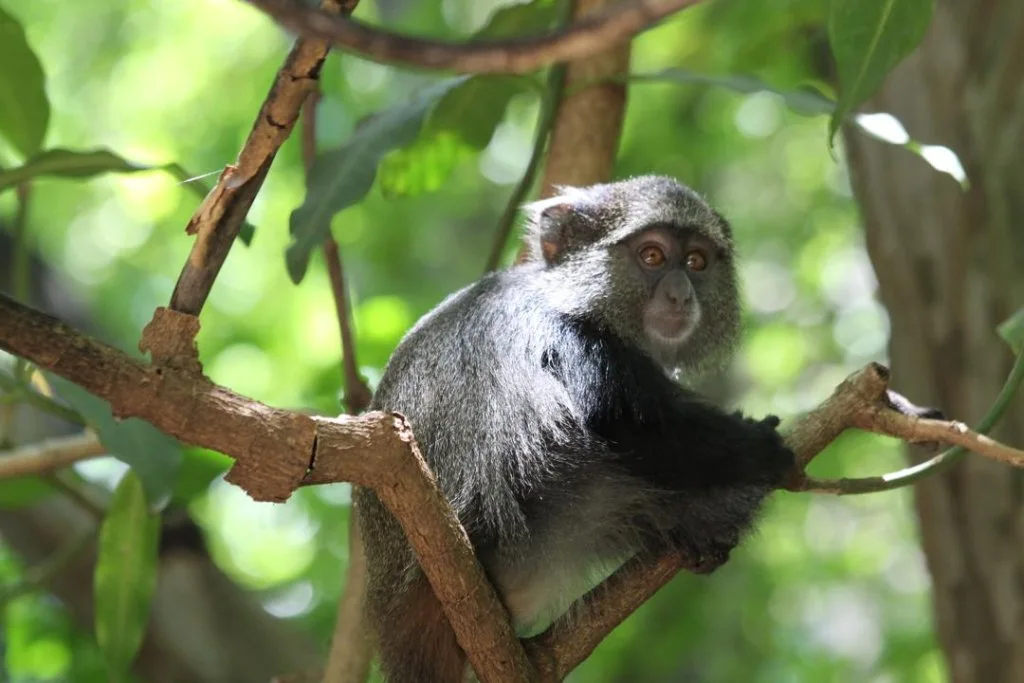
Kibale Forest
A western Ugandan rainforest holding the highest density of primates of any African forest, and a habituated chimpanzee community tracked on foot at dawn — the primate-focused counterpart to…
 ↗
Uganda
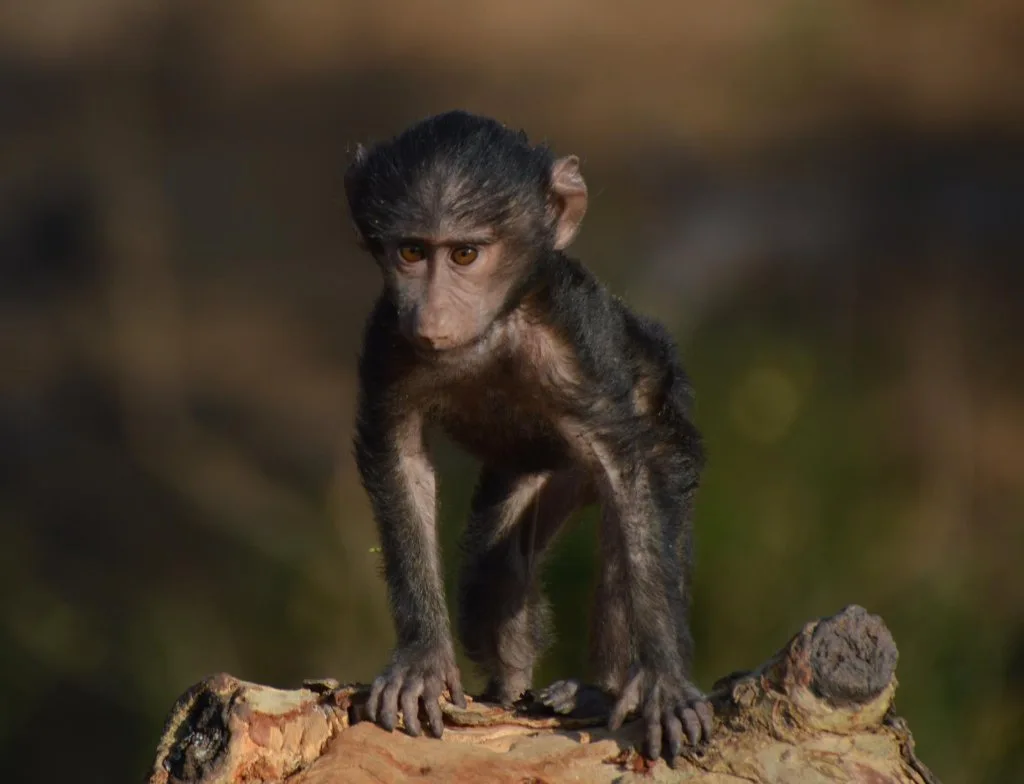
Queen Elizabeth National Park
Where the Albertine Rift escarpment drops into savannah, volcanic lakes and the wetland channels of the Kazinga — one of Uganda’s most varied landscapes, and the park where lions have learne…
 ↗
Journeys
Gorilla Trekking
Forest journeys in Uganda and Rwanda to spend one permitted hour with a habituated mountain gorilla family — the most intimate wildlife encounter on the continent.