Tanzania · Mount Kilimanjaro
Kilimanjaro. A mountain region, not only a summit.
Africas highest mountain rises from the plains to a glaciated peak — a destination in its own right, with distinct ecological zones, a region of towns and slopes around it, and the possibility of combining the mountain with safari or the coast.
Why Kilimanjaro
The mountain is a region, with a summit at its heart.
Kilimanjaro is often reduced to a summit attempt. As a destination it is more: the cultivated slopes and towns below the park, the forest and moorland belt, the alpine desert and the summit. A journey here can be a full trek, a shorter acclimatisation walk, or the mountain combined with safari and Zanzibar — each paced to the traveller.
Ecological zones
Five worlds, from farm to glacier.
The mountain changes completely as you climb.
Cultivated slopes
Chagga farms, coffee and bananas on the lower slopes below the park boundary.
Rainforest belt
Dense montane forest, humid and alive with birds and primates — the lower trek days.
Moorland and heath
Open heath, giant lobelias and senecios as the air thins.
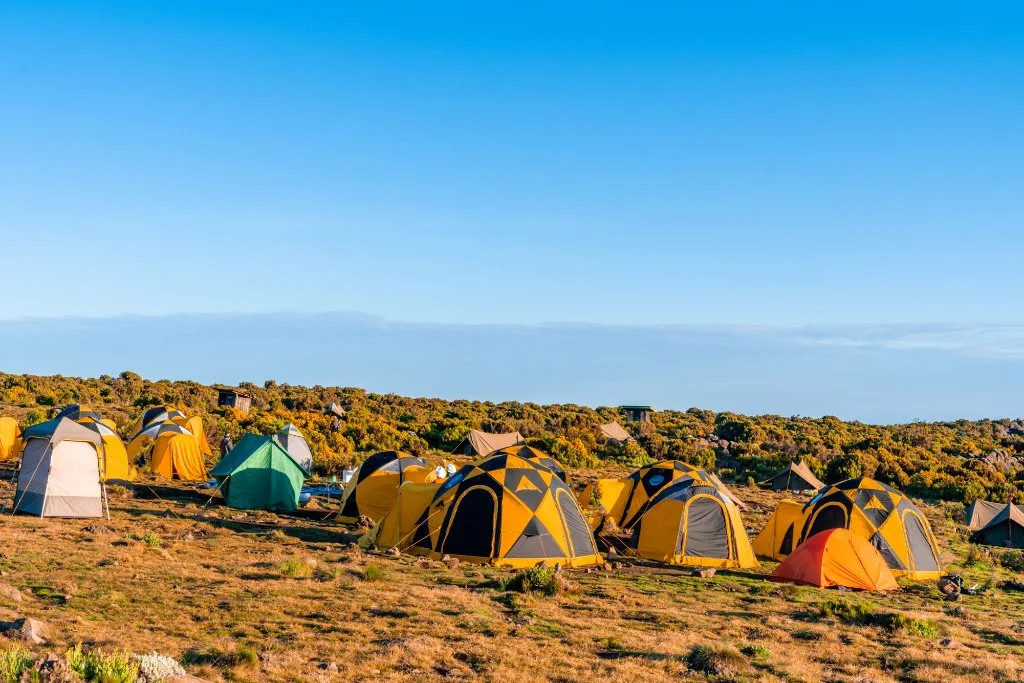
Alpine desert
Spare, dry and dramatic; the high camps before the summit push.
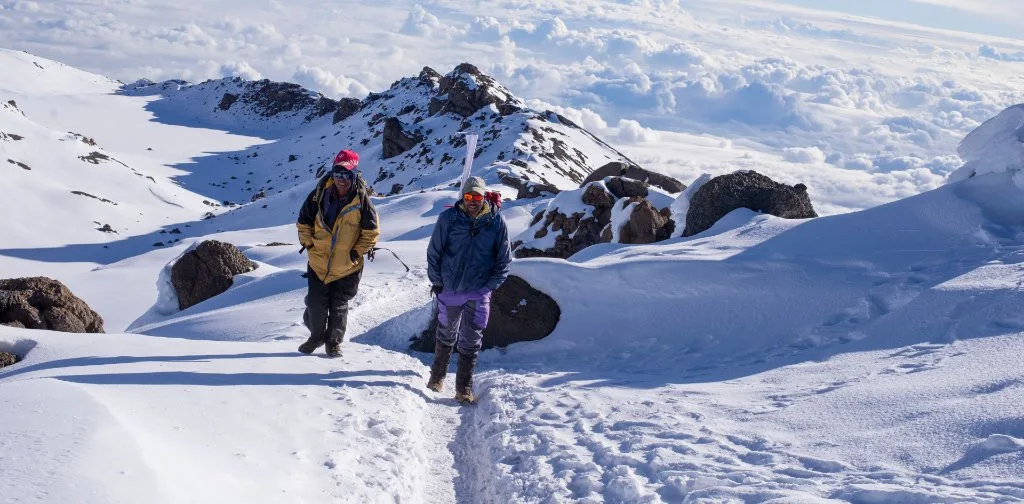
Arctic summit
Glacier ice, ash pit and the crater rim at Uhuru Peak — nearly 6,000 metres.
Route character
No single best route. The right route for you.
Routes differ in length, difficulty, scenery and summit success — there is no universal best. Longer, more gradual routes generally give a better acclimatisation profile and a higher chance of reaching the summit comfortably. We match the route to your experience, time and fitness, and we are honest about the trade-offs. The Kilimanjaro Journey page holds the route-by-route detail.
Acclimatisation and pacing
Climb slowly. The summit is earned by altitude, not speed.
Responsible pacing is the single biggest factor in a safe, successful trek.
Pole pole — slowly
A deliberate, slow pace is the core discipline of altitude. Rushing is the main reason treks fail.
Acclimatisation days
Longer routes build in profile; we choose routes that give the body time to adapt.
Honest expectations
We do not publish success-rate claims or medical guarantees. Altitude affects everyone differently.
Oxygen and monitoring
Crew carry emergency oxygen and monitor for altitude illness; descent is always the first treatment.
Local teams and porter welfare
The summit belongs to the crew.
Every Kilimanjaro trek is carried by a local mountain team — guides, assistant guides, cooks and porters. We work with crews paid fairly, equipped properly and treated with respect. Porter welfare is not a marketing line; it is who carries you up the mountain and brings you safely down. We are glad to tell you exactly how our teams are paid and equipped.
When to trek
The mountain has trekking seasons.
Indicative windows — weather on the mountain is its own.
January to March
Warm and dry
A popular, warmer window with generally clearer summit mornings.
June to October
Cooler and dry
The busiest trekking months; cooler but stable conditions.
April to May, November
Rainy periods
We avoid the long and short rains; conditions on the mountain are harder and routes are quiet.
Weather on Kilimanjaro is variable at any time of year. We plan around seasonal windows but do not guarantee summit conditions; safety always comes first.
Combine the mountain
The mountain pairs with safari and coast.
A Kilimanjaro trek combines naturally with the Serengeti or Ngorongoro before, and Zanzibar after — the classic mountain, plains and ocean arc. We sequence recovery days honestly and never rush the descent straight onto a plane.
Explore the Kilimanjaro Journey ↗Plan with us
Tell us which Kilimanjaro calls to you.
A full trek, an acclimatisation walk, or the mountain combined with safari and the coast. Share your dates, experience and fitness, and we will match the route and crew to you.
A sense of place
Take a moment. Look closer.
Continue your journey
There is more to discover.
 ↗
Tanzania
Serengeti
An ecosystem of nearly 15,000 square kilometres of protected plains, woodland and riverine forest — resident wildlife year-round, the movement of the herds, and a landscape that rewards time…
 ↗
Tanzania
Zanzibar
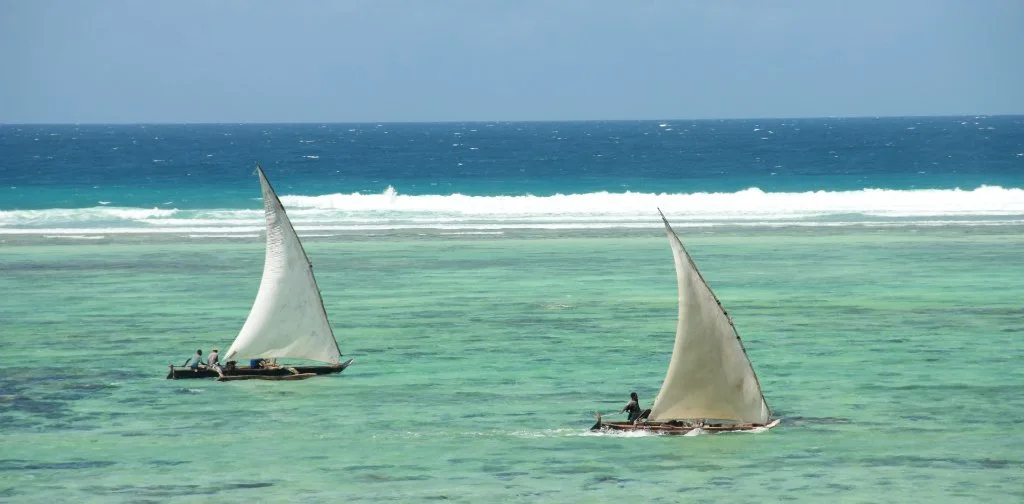
A centuries-old Swahili trading island in the Indian Ocean — Stone Town, spice farms, a living coast and beaches that earn their place after the bush. Zanzibar is best understood as culture …
 ↗
Journeys
Kilimanjaro
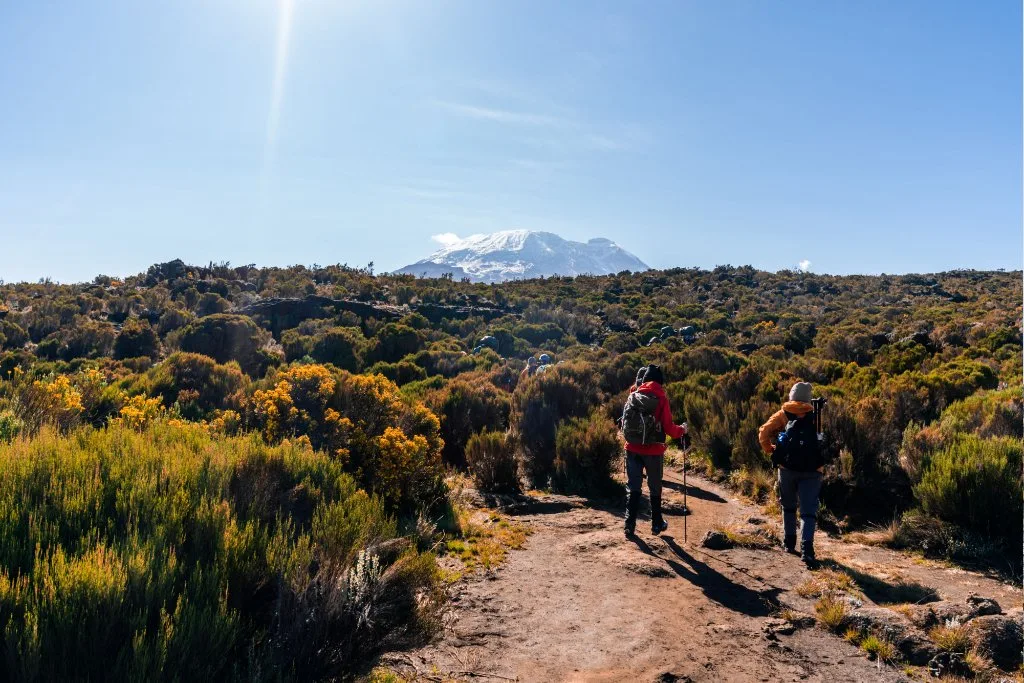
A trek to 5,895 metres is not a race to the top — it is a journey through every climate zone, made safe by acclimatisation and a team that walks with you.